
Why Your AI Workflow Needs to Evolve: Four Non-Negotiables for Modern Organizations
Why Your AI Workflow Needs to Evolve: Four Non-Negotiables for Modern
Organizations
The pace of AI advancement doesn’t just create new opportunities—it rapidly exposes
the cracks in outdated ways of working.

Kyle Smendziuk
7 min read
The pace of AI advancement doesn’t just create new opportunities—it rapidly exposes the cracks in
outdated ways of working. For years, businesses have approached AI like any other productivity tool:
pick something easy, encourage experimentation, and let people discover value organically. But that era
is over. If you need proof, look at the smartest organizations today: they treat AI not as an app, but
as infrastructure—just like accounting, CRM, or cybersecurity. They’re not worried about cool features;
they’re focused on memory, flexibility, integration, and teamwork.
Here are four urgent changes every organization should be making to their AI workflows right now—and
you can start on all four today.
1. Build Memory and Infrastructure: Your AI Work Is an Asset—Treat It Like One
Every day, your employees generate a goldmine of organizational knowledge through their interactions
with AI tools. From process documents and training prompts to nuanced customer service scripts or even
experimental R&D, this knowledge network is tremendously valuable. But here’s the problem: when
employees use personal accounts or scattered tools, all that intellectual capital is locked to the
individual—not your business.
If your team is saving key GPT chats to their own Google Drive, or if their best prompt libraries walk
out the door when they leave, you’re not just losing convenience. You’re bleeding institutional memory,
training data, and competitive advantage. The result? Every time there’s turnover or a change in
vendors, you’re back to square one—forced to retrain models, recreate context, and reestablish
expertise.
How to fix it: Approach your AI knowledge as core infrastructure. Set up a corporate
AI environment that consolidates your work into a shared memory layer. Platforms like
Backboard.io and other centralized memory tools are made for this:
they capture, organize, and make discoverable all your institutional prompts, outputs, learnings, and
context so nothing gets lost. But make sure that whichever platform you choose integrates smoothly with
your existing tech stack. The value of centralized memory grows exponentially when it connects with the
platforms your team already relies on and adapts to your workflows seamlessly.
When your AI workflow is built on robust, persistent memory that’s part of your technology ecosystem,
your organization doesn’t just learn faster—you ensure that value compounds with every job well done,
instead of leaking out every time someone leaves or changes roles.

2. Go Multi-LLM—Stop Vendor Lock-In and Futureproof Your AI Stack
Not all AI models are created equal. Some excel at reasoning, others at creative writing, still others
at summarization, coding, or specialized domains. If your team is locked into a single Large Language
Model (LLM)—because that’s what a particular vendor offers, or simply because it’s familiar—you’re
artificially limiting your options and hobbling organizational performance.
Imagine if the only software your business could use was Microsoft Word—no access to design tools,
analytics, or project management platforms. That’s what life is like in a single-LLM shop. Even worse,
when you inevitably reach for a different AI vendor, none of your knowledge, prompts, or user context
transfers over. You find yourself retraining Claude on months of ChatGPT history or re-uploading all
your context to Gemini, losing time and insight with every switch.
What’s the solution? Adopt a multi-LLM workspace as the default. Use tools that allow
you to leverage whichever model is best for a given task, while maintaining all your data, conversation
history, and context in one unified, model-agnostic environment. But don’t stop there—when evaluating
multi-LLM solutions, don’t just look at their model lineup, assess how well they plug into your
existing infrastructure. Can you integrate prompts with your project management tools? Does your CRM
automatically receive relevant outputs? Integration is what turns multi-LLM capability from a tech
novelty into an actionable organizational asset.
AI is evolving fast. Bet on platforms that value flexibility, open memory, and seamless connectivity
to your tech stack. Your stack should empower—not restrict—your best work.
3. Make Multi-LLM Teamwork Your Superpower
Most people have played with AI tools individually: they ask questions, write prompts, generate
drafts, and find clever ways to speed up their own tasks. But real organizational transformation
happens when AI isn’t just a solo tool, but a collaborative teammate.
In our agency, we train AI on the “Business DNA” of every client—and crucially, we do it as a team.
What sales learns about a client’s needs gets passed to onboarding. Production adds their insights,
then designers, developers, writers, and marketers all contribute. The result is a living, breathing
knowledge system where every lesson compounds and the margin for error shrinks with every handoff.
This approach isn’t just about efficiency; it systematically breaks down silos. When AI is trained
collectively—on shared goals, client context, and cross-disciplinary knowledge—everyone works smarter.
Whether you’re managing client accounts, running internal projects, or trying to align teams,
multi-LLM-enabled AI teamwork unlocks the real compounding power of artificial intelligence.
Start now:
- Encourage shared accounts and team knowledge bases for AI tools, rather than personal ones.
- Build shared prompt libraries and “context packs” for recurring tasks.
- Routinely review and improve how the team feeds data and learns from each other’s AI use.
- Choose platforms that not only allow team collaboration but sync easily with the other systems your
teams use—so every insight is available where your people actually work.
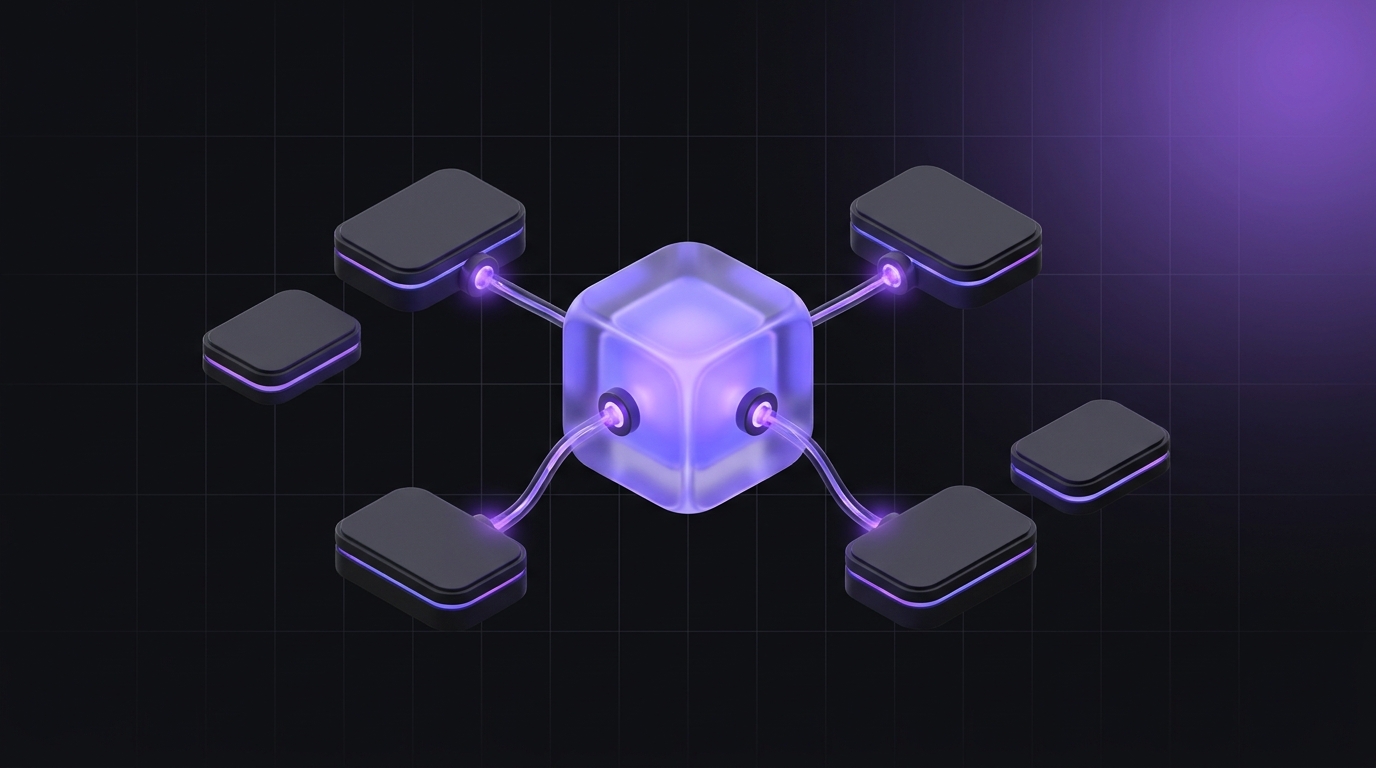
4. Seamless Integration With Your Existing Tech Stack Is Non-Negotiable
Even the most powerful AI setup loses its value if it operates in isolation. Too often, organizations
bolt AI tools onto their workflow without considering how they connect with the rest of their
technology ecosystem—from CRMs and project management to document management, analytics, and
communication platforms.
To capture and compound your AI-generated knowledge, you must ensure integration with the tools your
team already uses every day. A centralized memory platform is only as effective as its ability to pull
in context from, and share data with, your existing stack—whether that’s syncing with your Slack
channels, feeding insights directly into Salesforce, integrating prompts with Notion, or exporting
results to your BI dashboards.
When AI is seamlessly woven into your daily operations and existing software landscape, you eliminate
context switching, reduce error, and turn knowledge into action—automatically.
Non-negotiable
Integration isn’t an afterthought; it’s the connective tissue that unlocks true productivity and
organizational learning.
Final Word: Invest in Memory, Flexibility, Shared Intelligence—and Integration
AI isn’t just an app you install—it’s a core part of 21st-century business infrastructure. The
organizations that treat AI as a strategic asset—by investing in memory, embracing flexibility, turning
teamwork into a compounding engine, and ensuring seamless integration—will be the ones
who break out of the pack.
Stop thinking of AI as just a tool to be used; start building your organization around it as
infrastructure to be leveraged.
Your accountant, your lawyer, your CRM—and now your AI memory and intelligence layer—are all
business-critical. Invest in solutions that not only offer memory, flexibility, and collaboration, but
also fit seamlessly into your existing systems, so your AI knowledge works for you everywhere your team
does.
Interested in how your organization can get ahead with smarter AI infrastructure? Let’s connect, or
reach out to my team. Because the real race isn’t about using AI. It’s about using it better—together.